
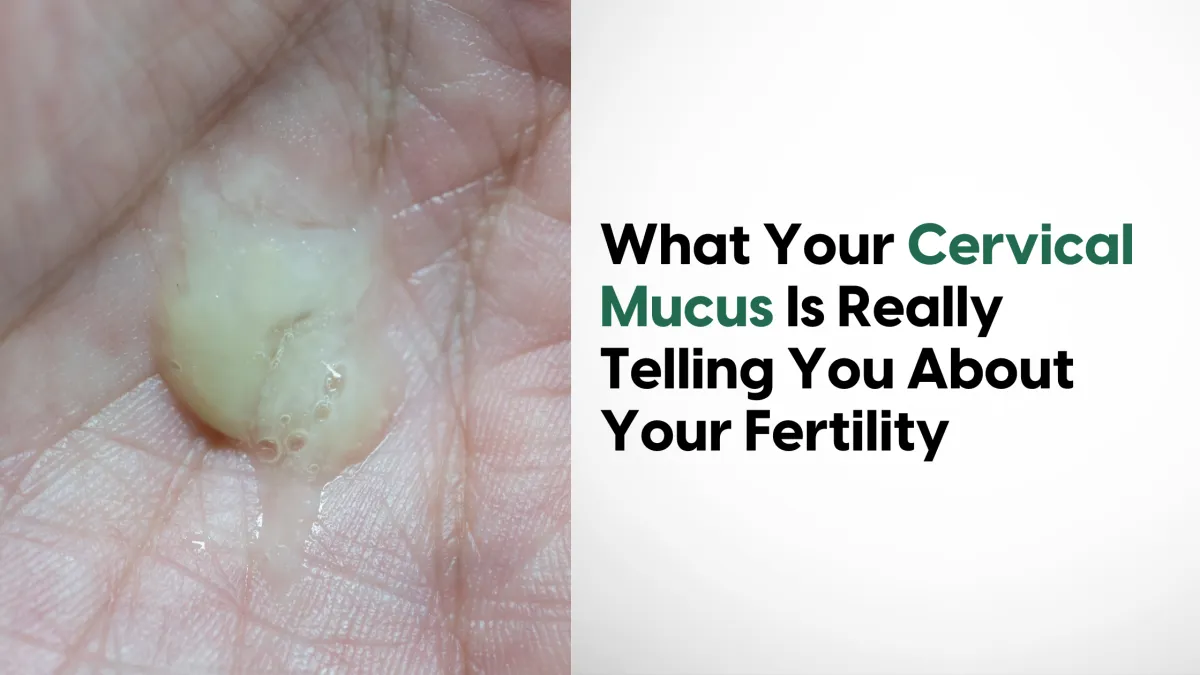
What Your Cervical Mucus Is Really Telling You About Your Fertility
Most women were never taught this—but your body is giving you signs every single day.
You’ve tried tracking apps, ovulation kits, and maybe even timing intercourse “perfectly,” but what if your body has already been giving you the information you need every single day?
Cervical mucus is one of the most accurate, real-time indicators of where you are in your cycle and whether your body is ready to conceive. But most women were never taught how to read it or that it even matters.
At RESTORED HEALTH, we specialize in helping women decode their body's signs, balance hormones holistically, and restore fertility naturally. Learning to read your cervical mucus is one of the first (and most empowering) steps toward body literacy and conception confidence. Let’s break it down, step-by-step.
Step 1: What Healthy Fertile Mucus Looks Like
When you're fertile, your cervical mucus changes to help sperm survive and travel to meet your egg.
This type of mucus is:
Clear, shiny, or slightly cloudy
Stretchy can stretch between your fingers like egg whites
Slippery and lubricative
Often described as a “wet” or “lotion-like” sensation when wiping
This fertile mucus usually appears in the days leading up to ovulation—your prime time for conception.
Step 2: What Dry, Sticky, or Cloudy Mucus Can Mean
Just as fertile mucus signals your “green light” window, other types of cervical mucus offer clues about your hormonal health and fertility readiness.
Here’s what different types may indicate:
Dry or very little mucus: Common right after your period or post-ovulation; could also suggest low estrogen or dehydration.
Sticky or tacky mucus: Usually seen in early follicular phase; not fertile.
Creamy or lotion-like mucus: Seen just before fertile mucus appears—your body is warming up.
Cloudy, yellow, or foul-smelling mucus: May signal infection or imbalance—worth checking in with your provider or practitioner.
If you rarely or never notice fertile-quality mucus, it may be time to dig deeper.
This could be a sign of:
Estrogen deficiency
Chronic stress
Thyroid or adrenal dysfunction
Poor gut or liver function
Nutritional gaps (like low zinc or omega-3s)
Step 3: How to Track and Respond to Your Body’s Cues
Tracking cervical mucus is simple, free, and powerful. Here’s how to begin:
Observe daily: After using the bathroom, wipe front to back and note the sensation (dry, wet, sticky) and appearance (clear, cloudy, stretchy).
Check before and after peeing: Midday and evening checks tend to be most reliable.
Record it: Use a paper chart or an app that includes mucus tracking (not just ovulation prediction).
Look for the pattern: Fertile mucus usually shows up for 1–5 days mid-cycle. This is your window.
Time intimacy accordingly: When you see egg-white cervical mucus, your body is telling you it’s go time.
Step 4: Common Mistakes to Avoid When Tracking Mucus
✅ DO stay consistent with daily checks—even if nothing seems to be happening
❌ DON’T rely on mucus alone if you’re dealing with known hormone imbalances, use it with basal body temp or hormone testing
✅ DO hydrate well your body needs water to create mucus
❌ DON’T use soaps or vaginal washes, which can disrupt the natural balance of your cervical fluid
✅ DO address the root cause if mucus is always missing—this is something we can help you uncover together
Step 5: What If You’re Not Seeing Fertile Mucus?
This is more common than you think. If you’ve never noticed stretchy, slippery cervical mucus, it’s often a sign, not a flaw.
Here’s what it might mean and what to do:
Low Estrogen Levels → Fertile mucus depends on rising estrogen. If your levels are too low, mucus may never reach that egg-white consistency.
Thyroid Issues → An underactive thyroid can dull hormonal signals and reduce mucus production.
Over-fasting or Undereating → Your body needs nutrients to build hormones and mucus.
Stress Overload → High cortisol can suppress both estrogen and ovulation—no mucus, no egg.
Post-birth control recovery → It can take months for natural cervical fluid patterns to return.
If this is your experience, you don’t need to go it alone.
Want to finally understand your cycle? Let’s talk. I’ll help you uncover what’s missing, decode your body’s signals, and build a natural path to conception.